Project management for creative studios, from brief to final files
Flori is project management for creative agencies of 2 to 20 people who also keep track of clients and new business. Each job starts from a signed-off brief, every feedback round is a visible task, the client approves from one link, and retainers run as a monthly project. It has no proofing or markup on files, so pair it with a proofing tool if comments on the artwork are your main problem.
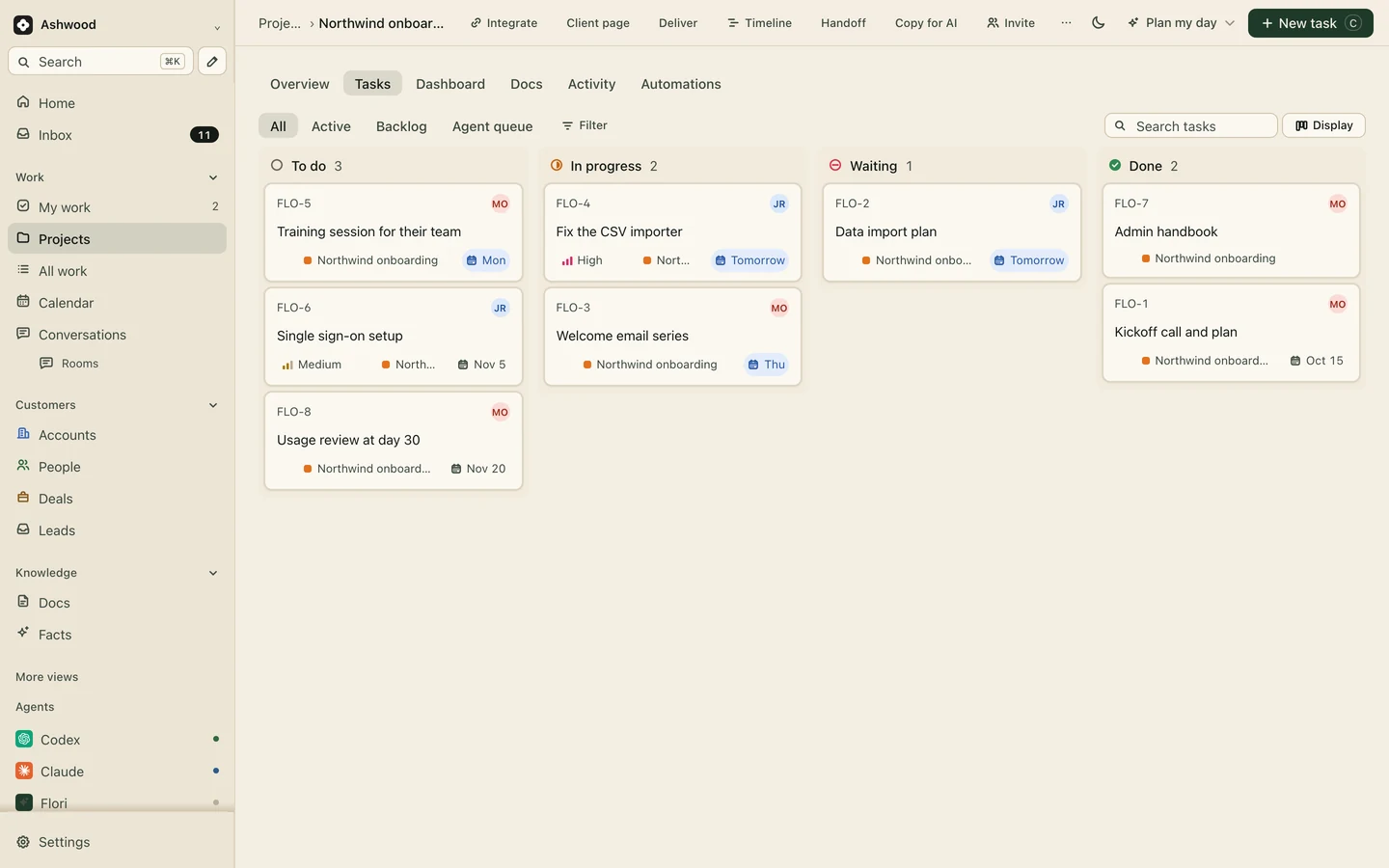
Fig. 1 · DemoA job’s rounds as tasks, so round four is visible before it happens
Where a studio’s jobs stop making money
Usually not in the design. In the rounds, the approvals and the requests nobody priced.
Losing count of rounds
The agreement says two rounds. Round four arrives as “one small change” and nobody can point to where the included rounds ended.
Approvals in a reply-all
The client says “looks great” to a thread with three versions attached. Two weeks later nobody can say which key visual they meant.
Retainer creep
The client asks for “one quick banner” eight times a month, and the end-of-month conversation is about a feeling instead of a list.
The brief is approved before concepts start
Start every job from a template that holds the brief approval, internal review, each feedback round and final delivery as tasks. A dependency keeps concept work from starting until the brief is approved, and each round is its own task with the round number in its name.
Internal review dated two days before the presentation
One task per round to consolidate the client’s comments into a single list
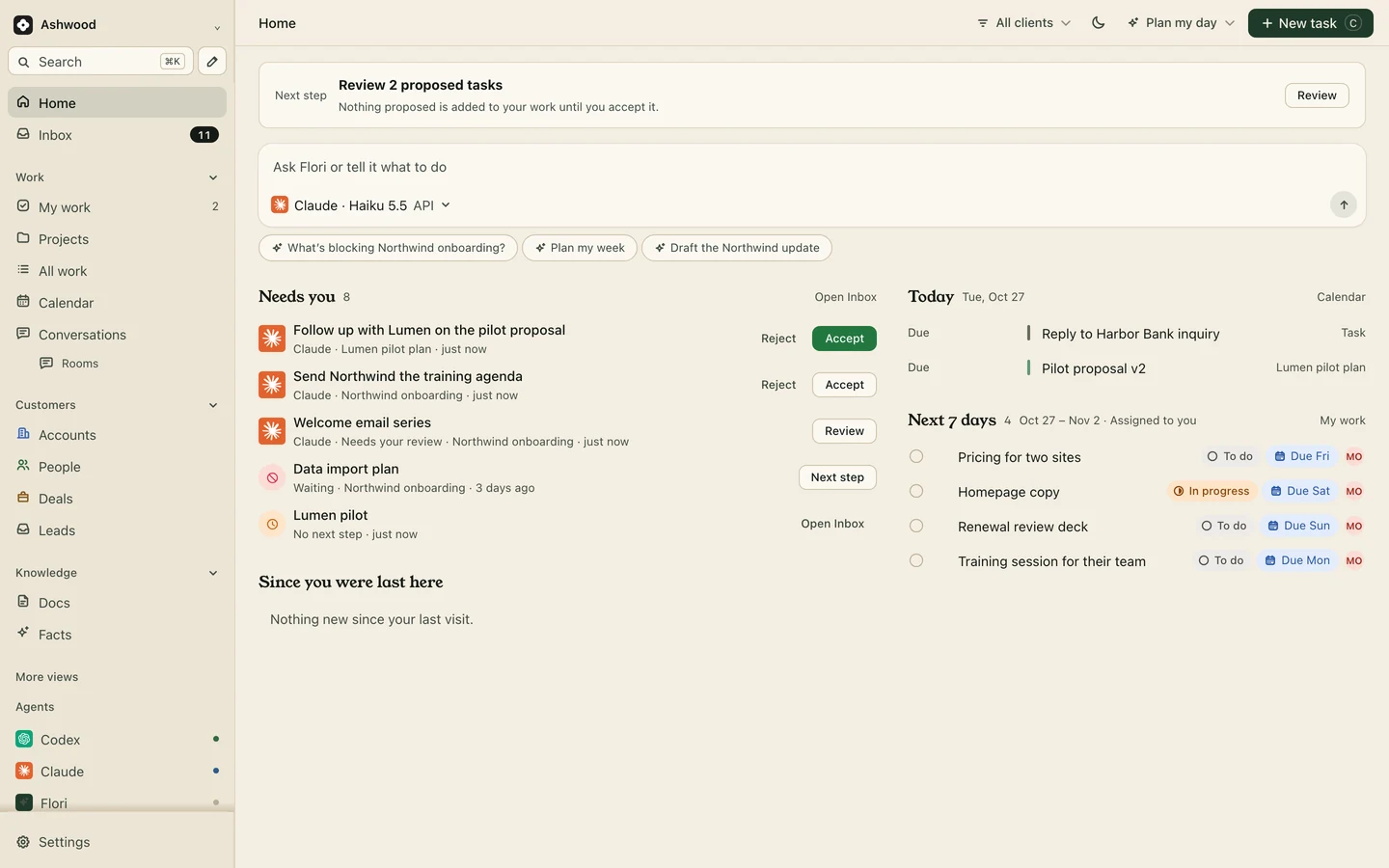
What is due today and what is waiting on a client.
Clients approve from one link
On Core, publish only what the client should see, such as “Homepage concepts, round 2, ready for your approval”. They open one link, look, and approve or ask for changes. Clients and guests are free, so the marketing lead, the founder and their brand manager can all have access without seats.
Client pages: Core and up
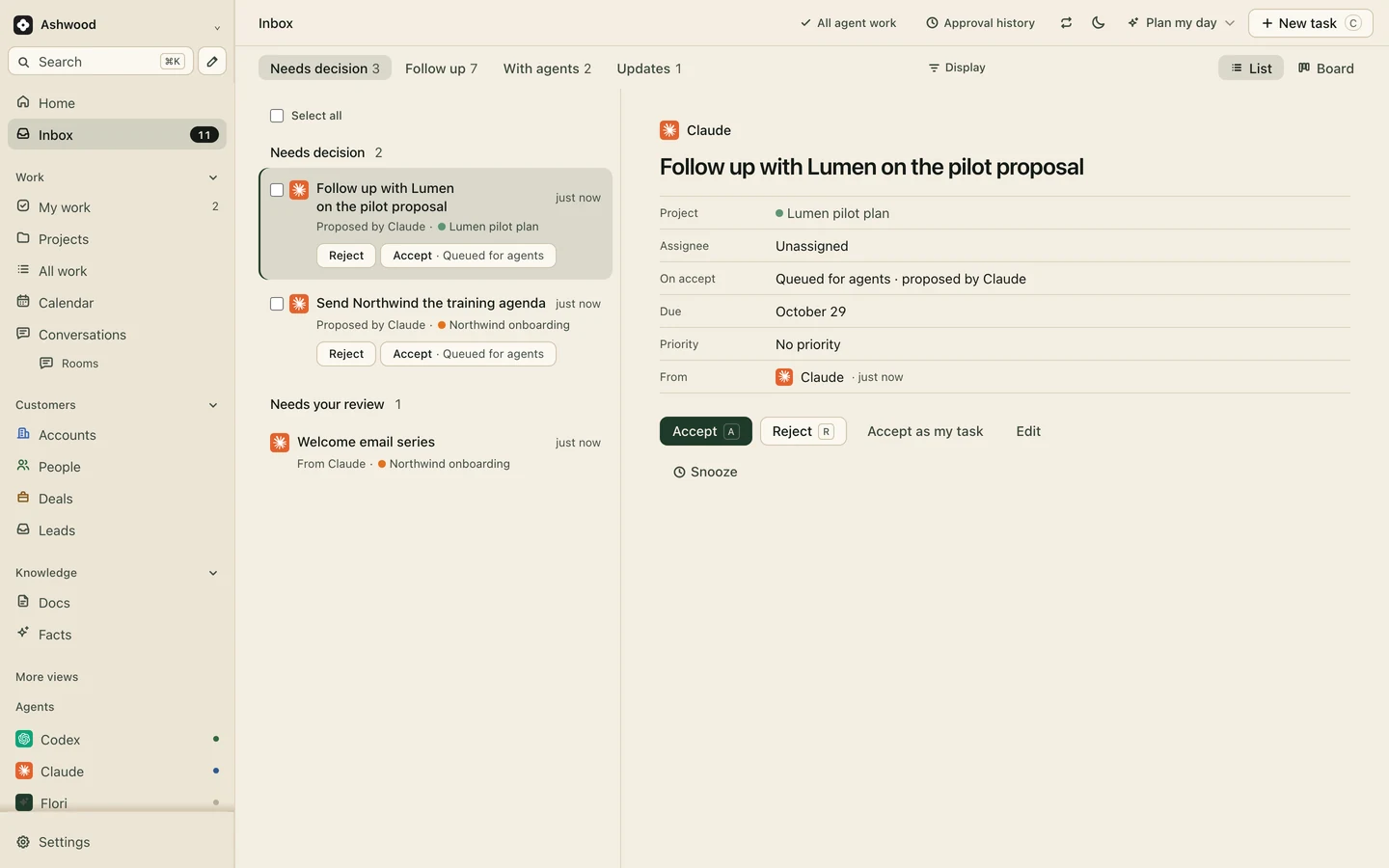
An assistant can draft the round’s change list; a person approves it.
Retainers as one project a month
Run each retainer as one project per client per month from that client’s template. The month’s deliverables are tasks, and extra requests are tasks marked outside the retainer, so the end-of-month conversation is a list: roll them into next month or quote them as extra work.
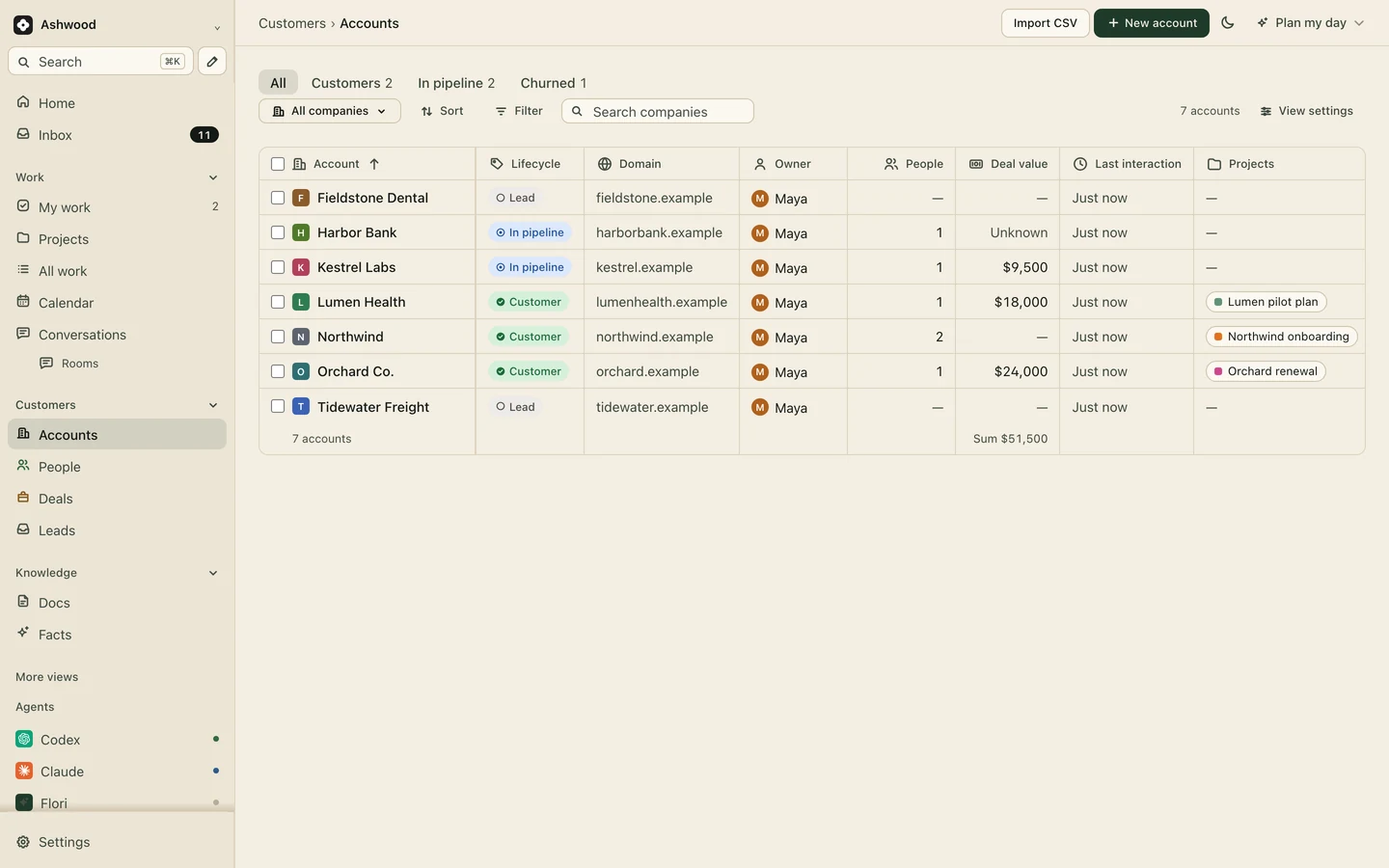
Each client with its retainer and project work linked.
A week in a five-person studio
Fictional example: Fernhill, an invented studio with four active clients and one retainer.
Monday
Fifteen minutes on one dashboard: three jobs in progress, two waiting on clients. Orchard’s packaging round two has waited since Thursday, so the account lead calls.
Wednesday
Internal review of Lumen’s concepts, on the date set when the job was created. Two concepts go forward; one goes back to the designer.
Thursday
Concepts are published to Lumen’s client page as round 1. Their marketing lead approves direction the same afternoon; the approval is on the task.
Friday
The retainer month is checked: 9 of 12 assets shipped, 2 requests marked outside the retainer. The owner sends next month’s quote from the client’s record in Gmail.
How does a job run from brief to final files?
A job in a small studio has five moments that decide whether it makes money. In Flori each one is a task on the job’s project, so the whole team sees where it is.
Moment
The task in Flori
What it stops
Brief signed off
“Brief approved” on the client page, before any concept task can start (a dependency)
Concepts built on a brief the client never agreed
Concepts reviewed internally
“Internal review, concepts”, owned by the creative director, dated two days before the presentation
The 6pm review the night before
Feedback round sent
“Key visual, round 1”, then “round 2”, each a separate task
Losing count of rounds, and an unpriced round four
Feedback consolidated
One task per round to turn the client’s comments into a single list, owned by the account lead
Two stakeholders’ contradicting notes reaching the designer separately
Final approval and delivery
Final files published to the client page for approval, then “Deliver final assets”
Shipping work nobody signed off
The creative brief template gives you the brief itself. For detailed comments on artwork, studios keep a proofing tool such as Filestage or Ziflow, both of which list free plans, and put the proof link and approval status on the Flori task.
What does a retainer month look like?
Fictional example: $7,500 a month for 12 social assets, 2 email designs and 1 landing page update. By the 20th, the studio has shipped 10 assets, 2 emails and the landing page, and the client has asked for 3 extra assets and a trade-show banner. On a monthly project, those four requests are tasks marked outside the retainer: they roll into next month’s allowance or are quoted as extra work.
If allocating people across a month is your daily job, a tool built for it will serve you better: Productive lists resource planning on its Essential plan, and Teamwork lists workload planning from Accelerate. As of November 2026. For a side-by-side of proofing tools, agency systems and resource planners, read project management software for creative agencies, compared.
Most studios start on Core
Core adds unlimited projects, client pages for approvals, forms for enquiries and Slack. Free covers unlimited people with 3 active projects, which is enough to try a real job. Clients, guests and connected assistants are never seats.
Resource planning or capacity scheduling across the studio
Project budgets or invoicing from logged time
Sending invoices or taking payment
Whiteboards, moodboards, or posting to social networks and ad accounts
Questions
Can clients approve creative work in Flori?
Yes, on Core and up. Publish the round to the client’s page and they approve or ask for changes from one link, without a paid seat. Flori records the approval on the task, but it has no markup, so detailed comments on the artwork need a proofing tool.
How should a creative agency track revision rounds?
Make each round its own task with the round number in the name, write the number of included rounds into the agreement, and have a change order ready. When round three appears on the board, everyone can see it was not in the original scope.
Can Flori manage retainers for a design studio?
Yes. Run each retainer as one project per client per month from a template, track the month’s deliverables as tasks, and mark extra requests as outside the retainer. Flori does not invoice retainers; bill from your accounting or invoicing tool. The agency retainer template has the month built.
Does Flori do resource planning for agencies?
No. My work shows each person’s tasks across clients, dashboards show what is in progress and waiting, and the time log shows where a job ran over. It has no capacity planning or weekly hour scheduling across a team.
Does Flori work as a project management tool for freelance creatives?
Yes. A freelance designer, illustrator or writer can run each job the same way: the brief, the rounds and the approval on the client’s record. Free covers 3 active projects, and client pages need Core. If you work alone, the freelancer setup is a closer fit.