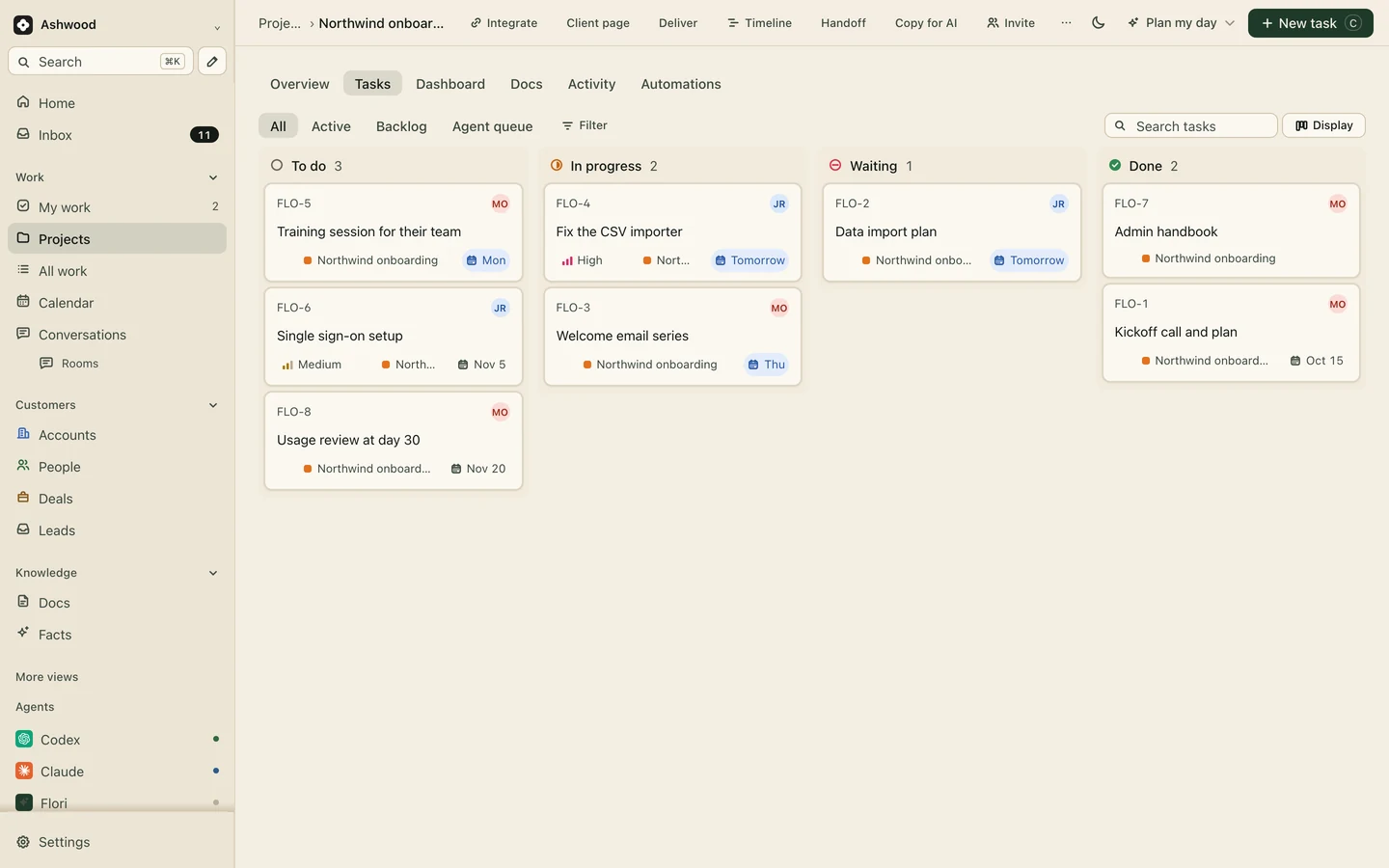
Your pipeline is the people you have already worked with. The engagement lives in workshop notes, a findings deck and the sponsor’s inbox, and the follow-on work depends on you remembering slide 14. Flori keeps the relationship, the engagement and what was decided on one record.
Fig. 1 · DemoWeek three of a six-week operations review for Northwind
Where an engagement leaks
The work drifts from the SOW
The statement of work covered three sites. After the kickoff workshop the sponsor wants a fourth looked at “while you’re there”, and it is never priced.
Interview notes nobody can find
Nine stakeholder interviews sit across a notebook, a Fathom folder and two decks. Finding what the CFO said about headcount takes an evening.
Follow-on work that waits on memory
The readout ends with five recommended next steps. Three months later the sponsor hires another firm to do the second one.
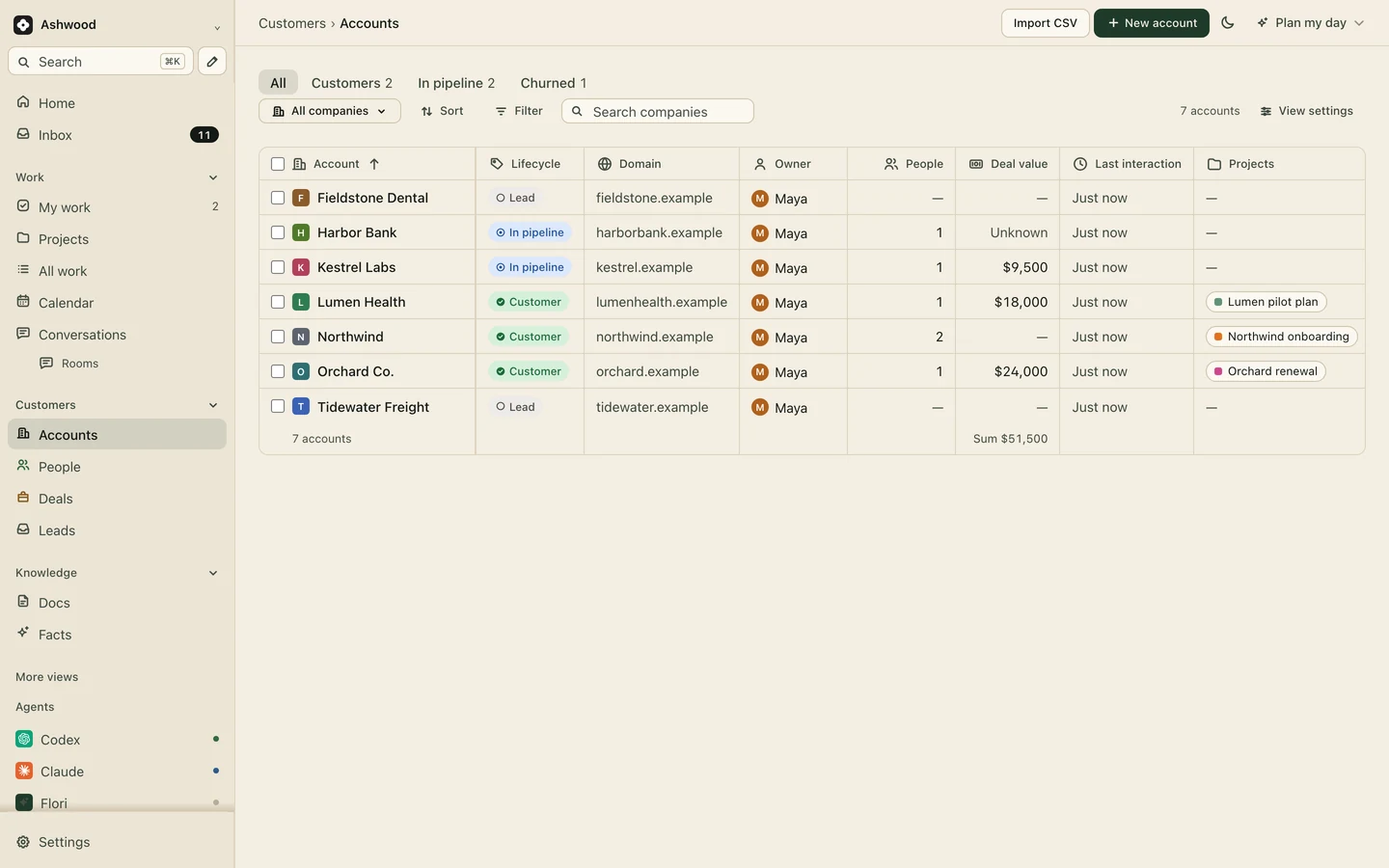
Proposals as deals, relationships as accounts
Keep the people who hire you as People on their companies, and every live proposal as a deal with its value and a dated next step. When the SOW is signed, create the engagement from your template, link the deal and check the scope: discovery, analysis and readout.
Past clients, open proposals and live engagements on one table.
Workshops and interviews become tasks and facts
Review captured notes from Fireflies, Granola or Fathom and accept the relevant tasks on the engagement. Save what each stakeholder said and what the sponsor decided as Facts, so you and any assistant you connect can find it in week five.
Meeting notes: Core and up
Northwind · Ops review · Facts
CFO, Oct 14No new headcount before Q2
Sponsor decisionFourth site is out of scope
Workshop 2Night shift overtime at 18%
ClRead all nine interview summaries and listed the four themes they share.
The sponsor sees progress on one page
Publish the milestones and the draft findings outline to a client page. The sponsor approves the direction from one link, and the approval stays on the engagement instead of in an email thread.
Client pages: Core and up
Northwind · Client page
Current state reportApproved Oct 17
Draft findings outlineWaiting for your approval
Readout workshopNov 12
Every next step from the readout becomes a deal
After the readout, create a deal for each recommendation you could deliver, with a dated next step. On Monday, ask Claude which past clients have an open follow-on and what you promised them.
Follow-on · Northwind
Shift planning rollout$36,000 · Proposal
Warehouse KPI dashboard$12,000 · Qualified
Next stepSponsor call, Nov 19
PSent the rollout proposal two days after the readout.
Week three of an engagement
Fictional example: An example from an independent operations consultant.
Monday
Three stakeholder interviews, recorded in Fathom. The notes become tasks: request overtime data from HR, confirm the shift pattern.
Tuesday
HR sends the data. The consultant checks the data and resolves the dependency before starting the analysis.
Thursday
Claude summarizes the nine interviews from the saved notes. You keep what holds up and publish the outline to the sponsor.
Friday
The sponsor approves the outline from the client page and asks for one more site visit. It goes on the board as a change to the SOW.
Walk an engagement from discovery to follow-on
Fictional example: an independent operations consultant is asked to recommend how a client should reduce dispatch delays. The sponsor owns the decision; an operations lead supplies data. The brief excludes implementation and adds no promise of a measured improvement before the analysis.
Discovery: save the decision the client needs, the sponsor and the unanswered questions. Keep an unconfirmed budget or deadline explicitly unknown.
Engagement: link the agreed scope, interview list and data request to the delivery project. Keep signatures and billing in the client's agreed tools.
Analysis: give each interview and data request an owner. Mark the analysis Waiting if the required data is missing. An assistant can summarize available notes; it cannot make missing evidence exist.
Readout: save the recommendation, supporting evidence and limitations. Publish the reviewed version for the sponsor and record the actual decision.
Follow-on: create an opportunity only for a discussed next engagement. Distinguish a proposed implementation from commissioned work or forecast revenue.
Adapt the intake questions and handover packet to your engagement. Replace website deliverables with the decision, analysis and receiving owner.
Test the saved decision in a new session
Ask your assistant to retrieve the sponsor's most recent decision and its source. Check whether it distinguishes an approved recommendation from an unsigned follow-on proposal. Begin read-only. If you later request changes, choose a proposed-work flow when review is needed; authorized direct updates can save immediately.
This is a suggested exercise, not a completed consultant trial. Keep the current CRM if it preserves these decisions well and a second workspace would add maintenance.
Core covers the engagement workflow
Core gives unlimited engagements and clients, client pages for the sponsor, meeting notes, project templates and forms. A small firm adds people at the same per-person price, and the client’s team joins free as guests.
A light one. Most work comes from past clients and referrals, so you need relationships, open proposals and follow-on work on one record, not sequences and lead scoring. See the Flori CRM.
Can an AI assistant read my client data?
Only if you connect one. Assistants connect over MCP with OAuth, to the whole workspace or one engagement, read-only or with update access. Saves record the assistant that made them. Proposed and submitted work have review paths; authorized direct updates can save immediately. See connect your assistants.
Can I write the statement of work in Flori?
You can keep the SOW as a doc linked to the engagement and start from the statement of work template. Flori has no e-signature, so the client signs in your usual tool.
What does a three-person firm pay?
Core is $12 per person a month, or $10 billed yearly, so $30 to $36 a month for three. Client sponsors and guests are free, and assistants never count as seats.