One owner and one date on every task
Each person opens My work and sees their own tasks across every customer and internal project. Dependencies show what each job is waiting on, and Waiting marks what is with the customer, not with you.
Teams of 3 to 20 tend to run on a CRM nobody updates, a project board, a folder of docs and a group chat that holds the truth. Flori puts customers, jobs and notes in one workspace with one owner on every task, and connects the ChatGPT or Claude your team already pays for.
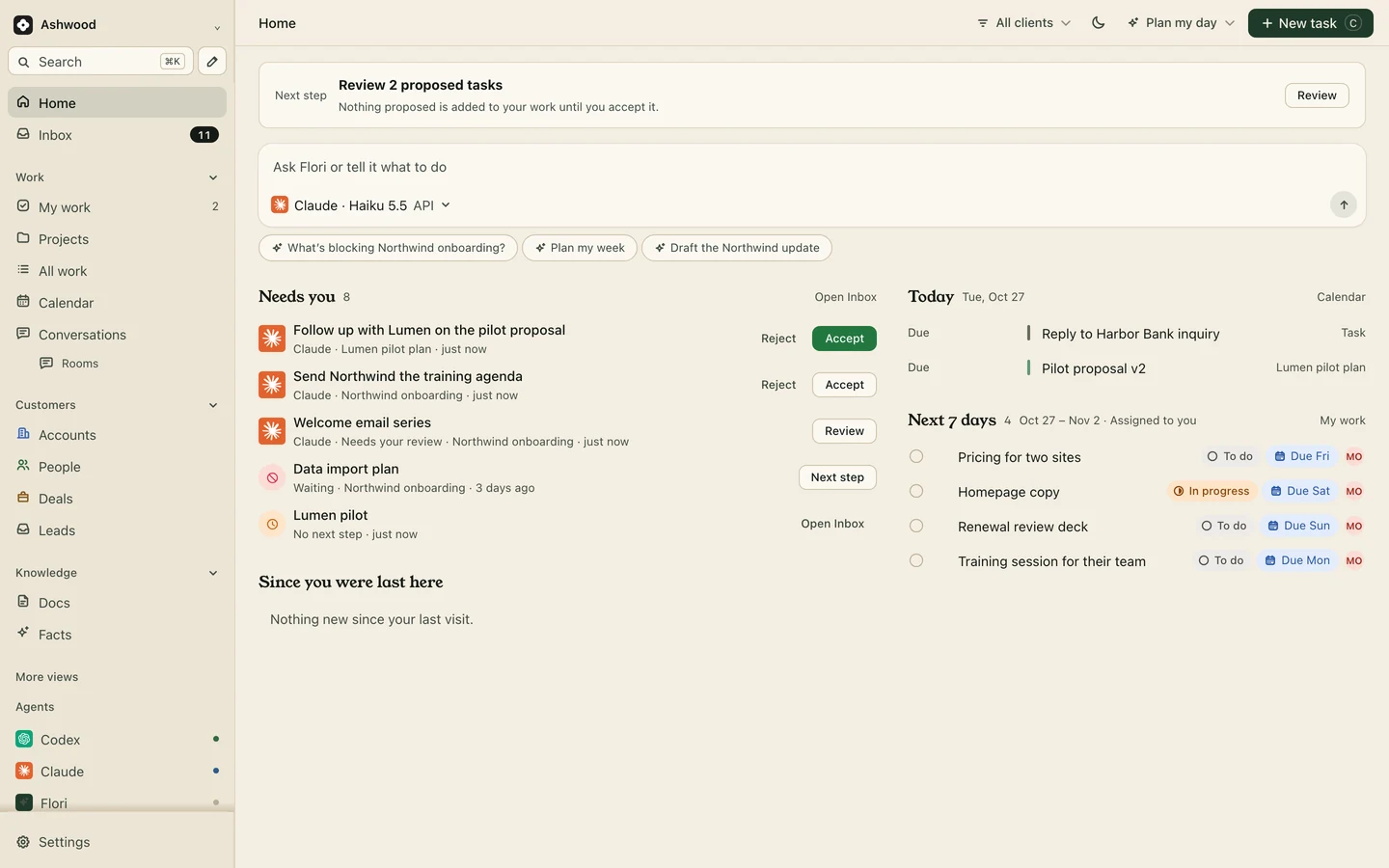
Fig. 1 · DemoMonday morning: today’s tasks and the next seven days
“Order the switches” sat on the board with no owner. The install date arrived and the hardware did not.
Sales promised a Friday install in a direct message. The technician found out Thursday night.
The CRM says Calloway Law is happy, the board shows two overdue tasks, and the handover notes are in a doc only the office manager can find.
Each person opens My work and sees their own tasks across every customer and internal project. Dependencies show what each job is waiting on, and Waiting marks what is with the customer, not with you.
When a quote is accepted, create a project from your template and copy the accepted scope into its brief, keeping the site notes on the account. Whoever does the work reads the same record the seller wrote, so nobody re-asks the customer.
Project templates: Core and up
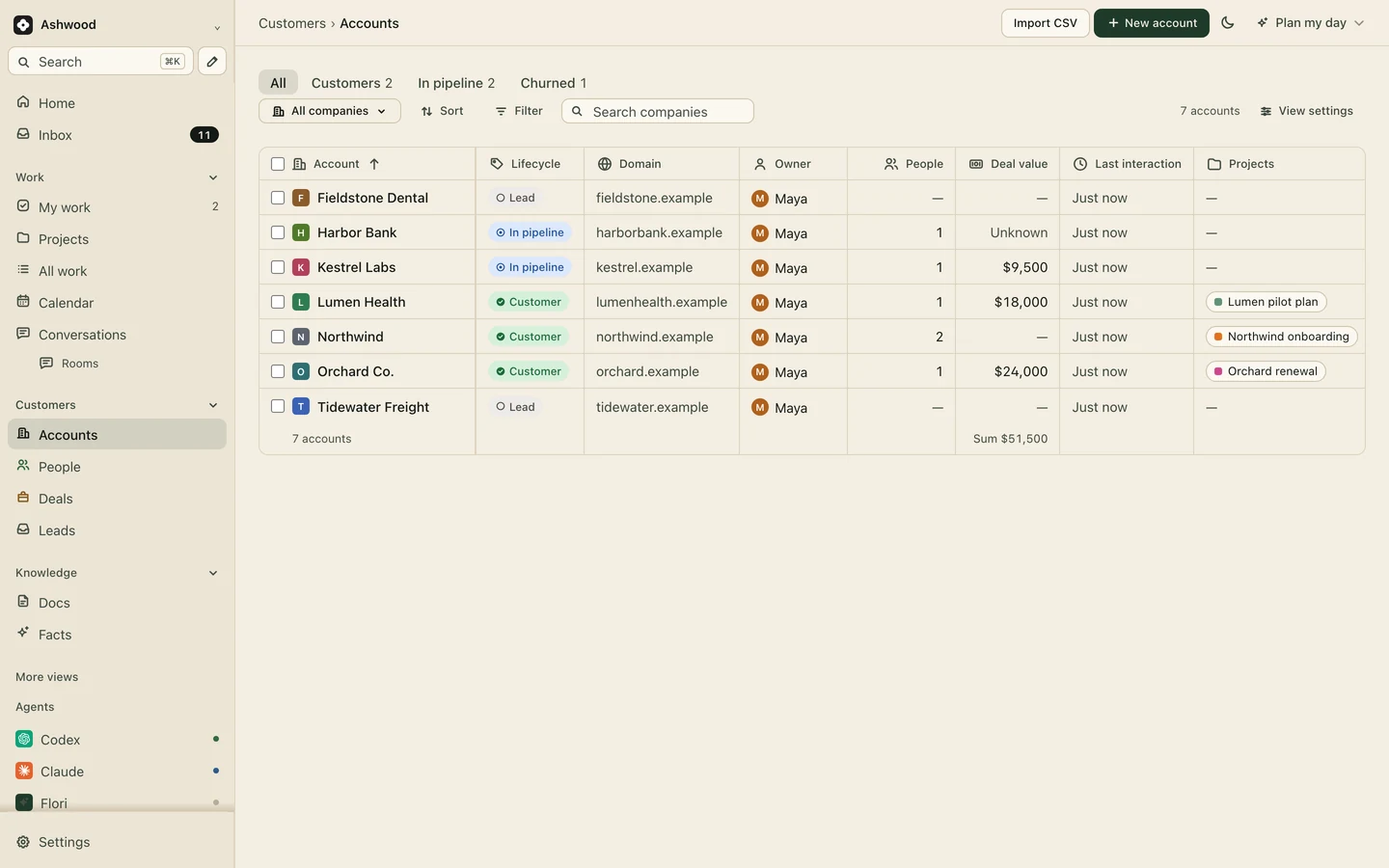
Customers, the people at each one, open quotes, projects and docs share one workspace. Bring accounts and deals over from a CSV, link docs and sheets to the project they belong to, and post updates to the Slack channels you choose.
Slack: Core and up
Half the team pays for ChatGPT, someone else uses Claude. Each person connects their own, scoped to one project or the whole workspace, read-only or with update access. Proposed and submitted work have review paths, while authorized direct updates can save immediately. Saves show which assistant made them.
Fictional example: An example from Keystone Systems, seven people who set up office IT for small businesses.
The owner opens the dashboard: four installs, one quote waiting on a customer, nothing overdue. Nobody calls a meeting.
Calloway Law accepts the quote. The install starts from the template, with the site visit set to follow the switch order.
Jordan finishes on site and marks the install done. The update posts to the installs channel in Slack.
Priya’s ChatGPT drafts the handover notes from the tasks. She edits two lines, approves them and publishes them to the client page.
Free has unlimited people and 3 active projects, enough to run one job end to end before you move the team. Core removes the free-plan project and customer-record limits and adds templates, Slack, meeting notes and client pages. Guests and assistants are never seats.
Core $12 per person a month, or $10 billed yearly
Start freeYou need a customer list that the people doing the work can read: who the customer is, who you talk to there, what was quoted and what is in progress. That is the CRM in Flori, without forecasts or sequences. See the Flori CRM.
Yes. Import accounts and deals from a CSV, then link each customer to the projects you are running for them.
Both work. Each person connects their own assistant to the projects they choose, and every change records which assistant made it. Flori sells no AI credits, and assistants are never seats.
Core is $12 per person a month, or $10 billed yearly, so $70 to $84 a month for seven people. Clients and guests are free. See pricing.